
The readings for the First Sunday of Lent act as a kind of overture to the entire season. They enable us to engage in a double confession: a confession of sin and the repentance which follows; and a confession of praise for the mercy of God which is shown us in spite of our sin.
The very first reading reminds us of our fragility. We are made of the dust of the ground, the very stuff that represents death and decay. We were reminded of this when ashes were used to sign us on Ash Wednesday. At the beginning of Lent we are invited to acknowledge honestly and realistically our fundamental human weakness.
Despite our weaknesses, the situation within which we find ourselves is not hopeless. Somewhere deep within ourselves we know that we are not helpless prisoners of our limitations. God has not deserted us to our guilt. The form that God’s compassion takes is outlined in the reading from Romans. It is in the death and resurrection of Jesus that we see the extent of this divine compassion. Its scope is first measured by the yardstick of human sinfulness, and then it outstrips those dimensions. God’s gracious gift far exceeds the effects of human transgression.
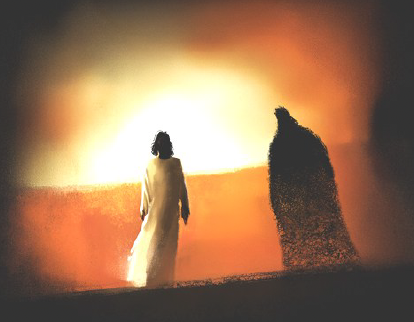
The gospel reading moves us from both the anthropological and the theological considerations to the crowning Christological reflections. As we look to Jesus, we see humanity at its best, tempted but not overcome. There will certainly always be human limitations, human weaknesses that will open the door to temptation. But Jesus shows us that we are not thereby doomed. Jesus is a model for our own journey to new life.
© Dianne Bergant CSA, https://www.liturgyhelp.com/calendar/date/2026Feb15/0/RefDiBer