
These days young couples ask for their children to be baptised for a variety of reasons. Initially, it’s clear that for some, baptism is an elaborate naming ceremony, or the ritual preliminaries to having a ‘we’ve had a baby party’. For others, while they don’t quite know why they want baptism, they just know they do. And for some parents it’s clear that they wish to pass on to their children the life of Christ that has nurtured them. At the baptismal ceremony, I always begin by saying that for the first three centuries of the Church’s history, this sacrament was celebrated at dawn on the Easter Vigil not only because the rising sun symbolised Christ’s light dawning in our lives, but because baptism was always done in secret. For 300 years Christians who took the waters of baptism at dawn could be dead by lunchtime. For them, baptism was no social day out; it was a life and death commitment.
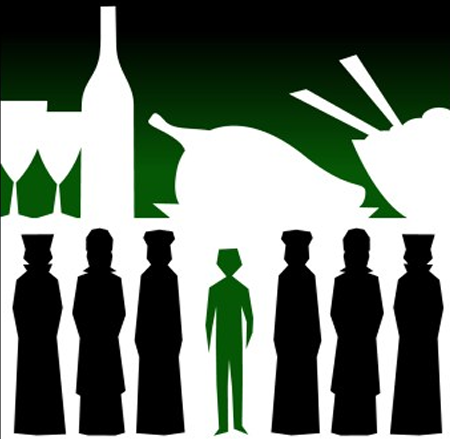
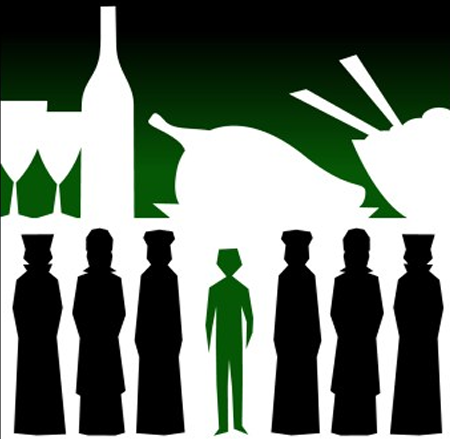
In the parable of the King’s banquet, Jesus foreshadows the days when those whom one would expect to be Christian would reject the invitation to faith, and those thought least likely to respond to God’s call would flock into the Church. Since the earliest days of Christianity, the Wedding Banquet was seen as a metaphor for two things: the Eucharist and Eternal Life. Curiously, this parable, while using the imagery of the Banquet, is less concerned about the meal and more about who’s in and who’s out, and why!
We can see this through the tenants who turn down the opportunity to go to a Royal Wedding – still an almost unimaginable thing to do. It’s seen in the poor who recognise the gift and the giver, get dressed up and have somewhere to go. And it’s seen in the impostor who is not correctly dressed for the occasion and is speechless when called to account. This last character is clearly the one in the earliest Christian community who has taken the waters of baptism, but was betraying St Matthew’s persecuted community. When discovered, people like this guest were thrown out. In Matthew’s time, impostors cost lives.
So what does all this have to say to our own time? It’s not about how one dresses for Mass or for Eternal life! It’s not about the fear of being found wanting in being able to mouth the right words when called to account. It is about being poor enough to recognise the gift of God in the invitation to faith and about being generous enough to respond completely. For taking care about what we say and do, the values by which we live our lives at home, at work, at play and in the way we relate to each other is how we show that we mean what we profess. It is also how others legitimately judge whether we are really genuine about our faith or just another impostor.
Like the earliest Christians, when we were baptised we were clothed in a white garment – a wedding robe. Like theirs, our baptismal day was no naming ceremony and no social day out. It was the day we were issued with a standing invitation to the feast of life in Christ where people act as they profess, and where frauds are spotted a mile away.
© Richard Leonard SJ, https://www.liturgyhelp.com/calendar/date/2026Oct11/0/HomRiLen